When the Branch Holds: Finishing Without Contradiction
What happens when your chosen candidate turns out to be correct? A look at the ibtree method's success path—and a practical verification technique for any completed grid.
In this study
01 · The other outcome
The other outcome
In the first six lessons, we witnessed the magic moments when the ibtree method greatly simplifies the solving steps of extreme Sudoku puzzles by testing a "chain trigger" digit—out of two or three options within a box—that eventually leads to a contradiction. But what contradiction exactly? Any valid classic Sudoku puzzle carries a hidden assumption: it has one and only one solution. Any conflict means you're not on the path to that one solution.
But beforehand, we don't know whether the chain trigger we selected will lead to a contradiction. As a matter of fact, we have roughly a 50 percent chance that the digit we choose to test is actually the correct digit. If that's the case, we simply finish the puzzle if possible, then verify it's the solution.
02 · Setup
Setup
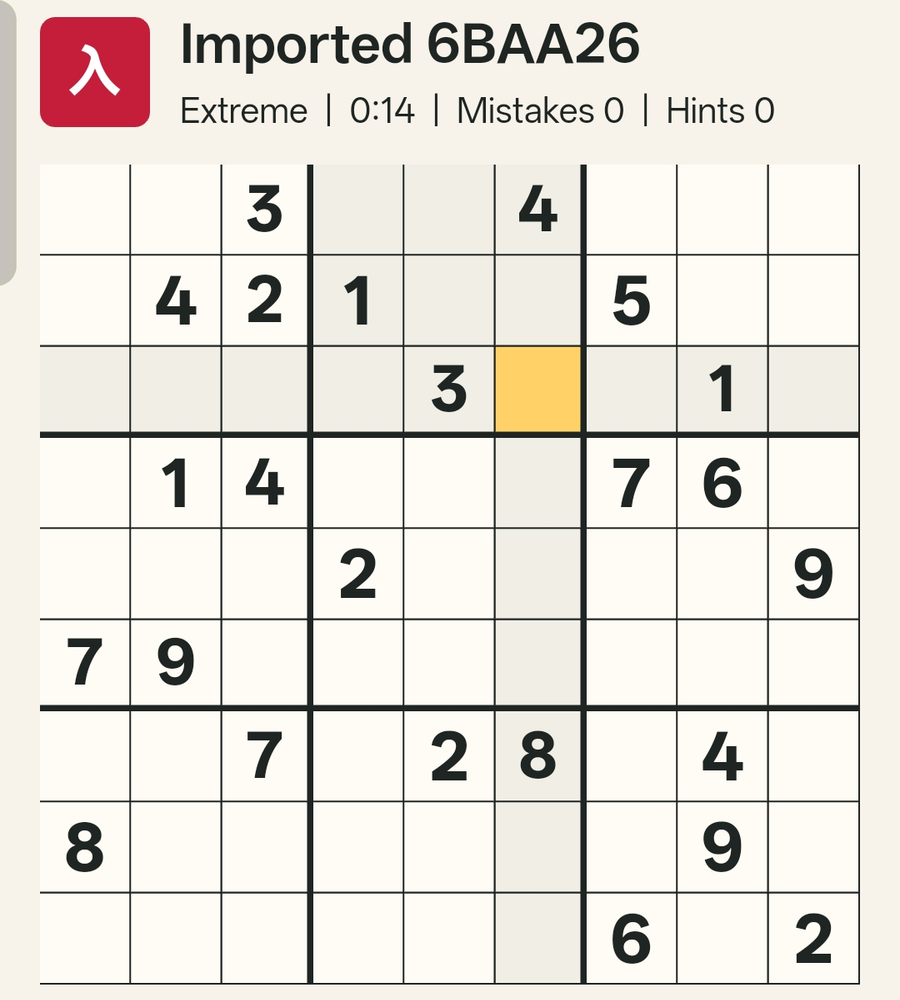
Initially, we can fill in several digits by applying cross-hatching—quick and easy. Once we've placed a digit in a particular row or column, we can often spot what the narrative calls a "confined group" without resorting to full candidate reduction (canred). A confined group is a set of two, three, or even four digits that must occupy a specific set of cells within a box or line, limiting the freedom of choice for the remaining cells.
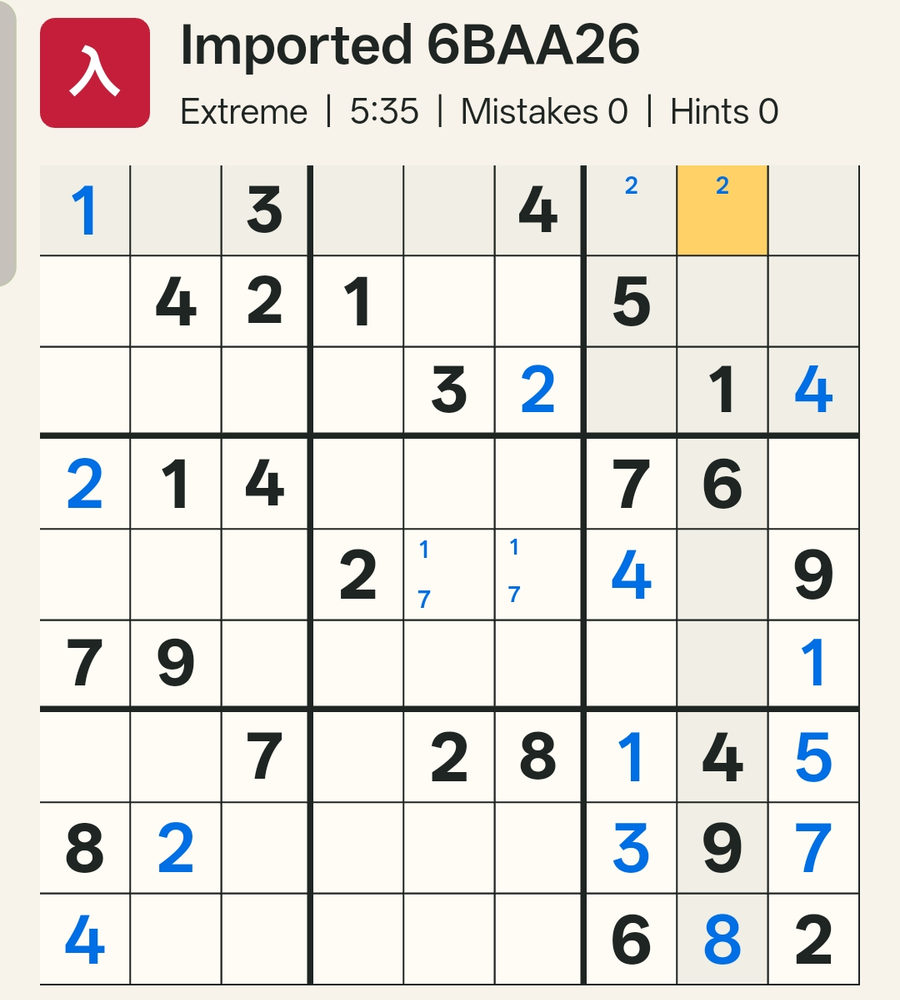
The ibtree method gives this pattern a slightly different name than the candidate-reduction world does. Instead of "naked pair," we say confined group—it could be two, three, or even four digits sometimes, constraining the remaining cells within the box or line it occupies.
03 · Fork
Fork
In Box 3, there are two possible placements for the digit 2. We notice that one of them is more interesting and can lead to a chain reaction—so we assume it and trace forward to see what happens.
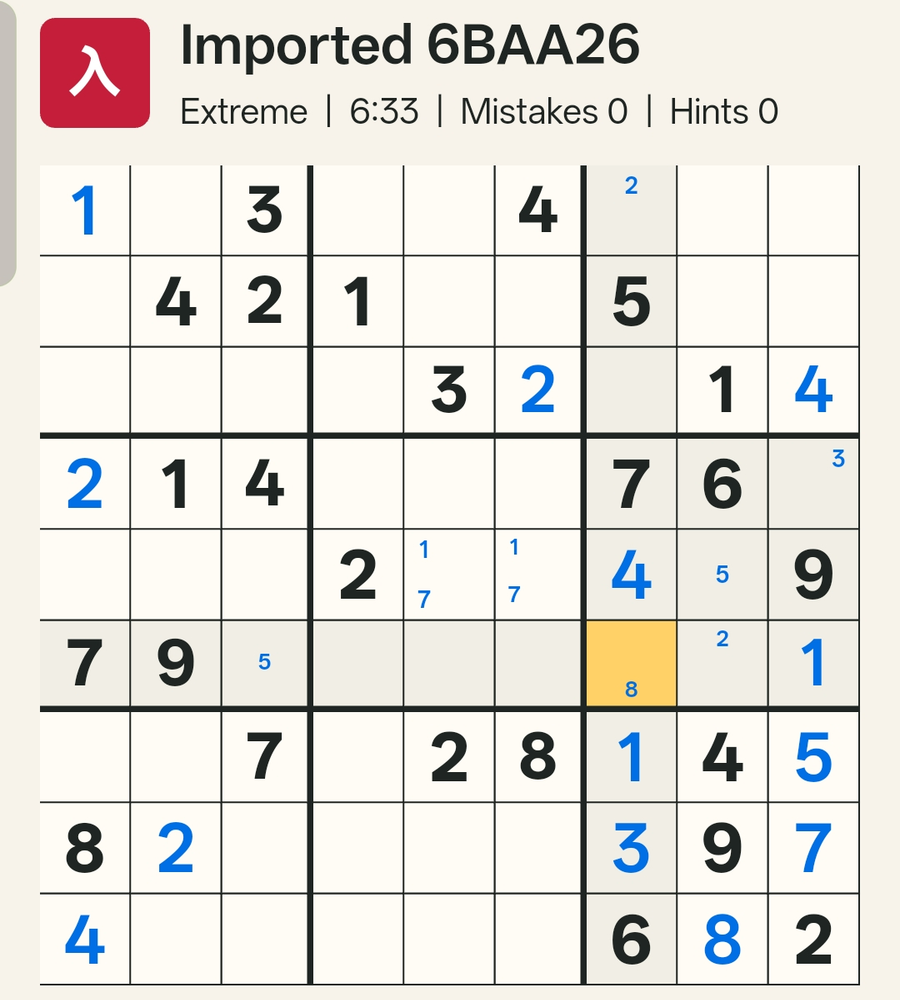
As the initial trial leads forward, Box 6 finishes without conflict. This is a good sign, but not yet a proof—we need to keep moving.
04 · Chain
Chain
Further down the road, we notice Box 2 has two possible placements for the digit 7, while Box 5 already has that 1-7 confined group. This creates what the narrative calls a parallel control of 7—two boxes constraining the same digit along parallel lines.
05 · Parallel control
Parallel control
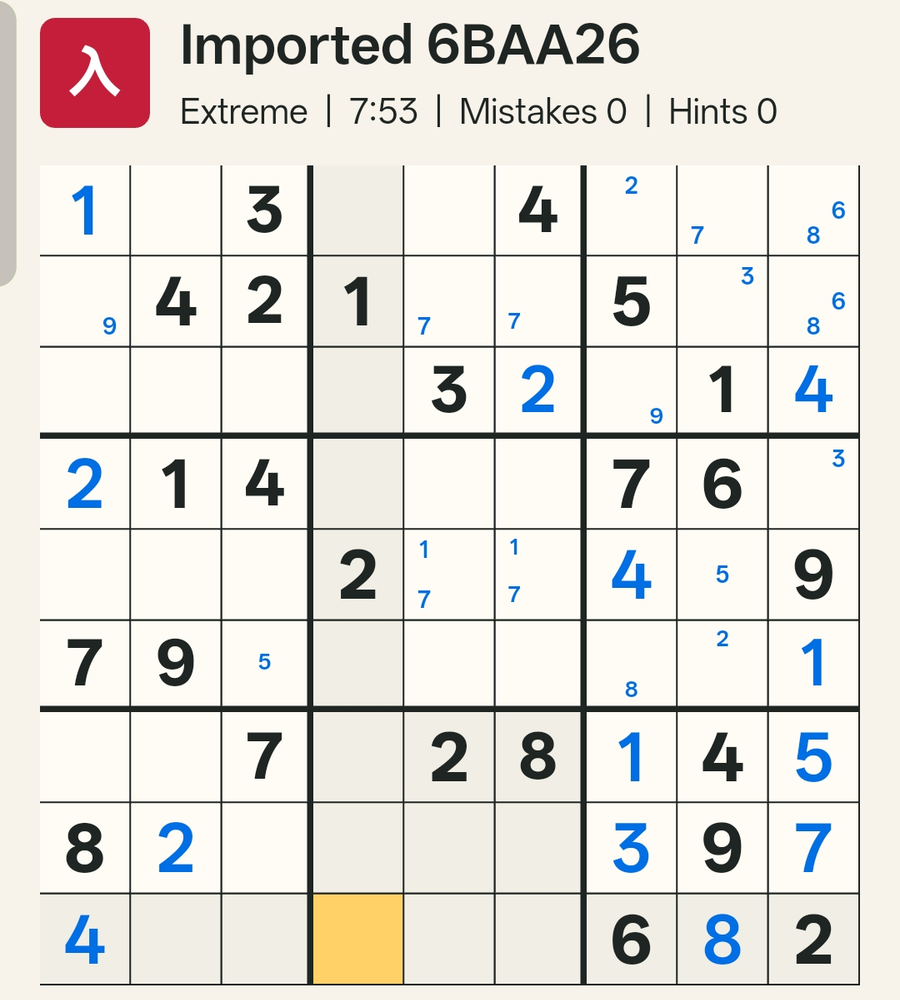
By the same argument as an X-wing, we know that in Box 8, the digit 7 must reside in a specific column. Adding horizontal constraints, we can confirm the exact placement.
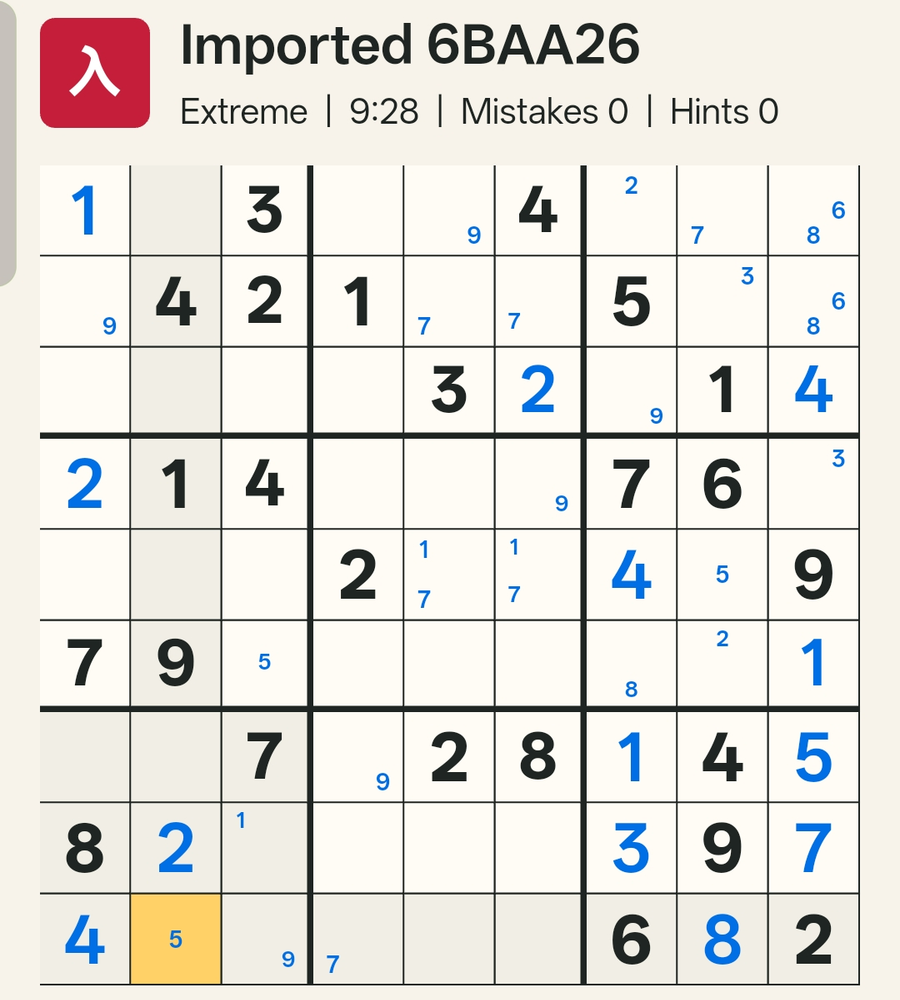
As we continue moving forward, we gain additional digits for Box 7 and beyond.
06 · Completion
Completion
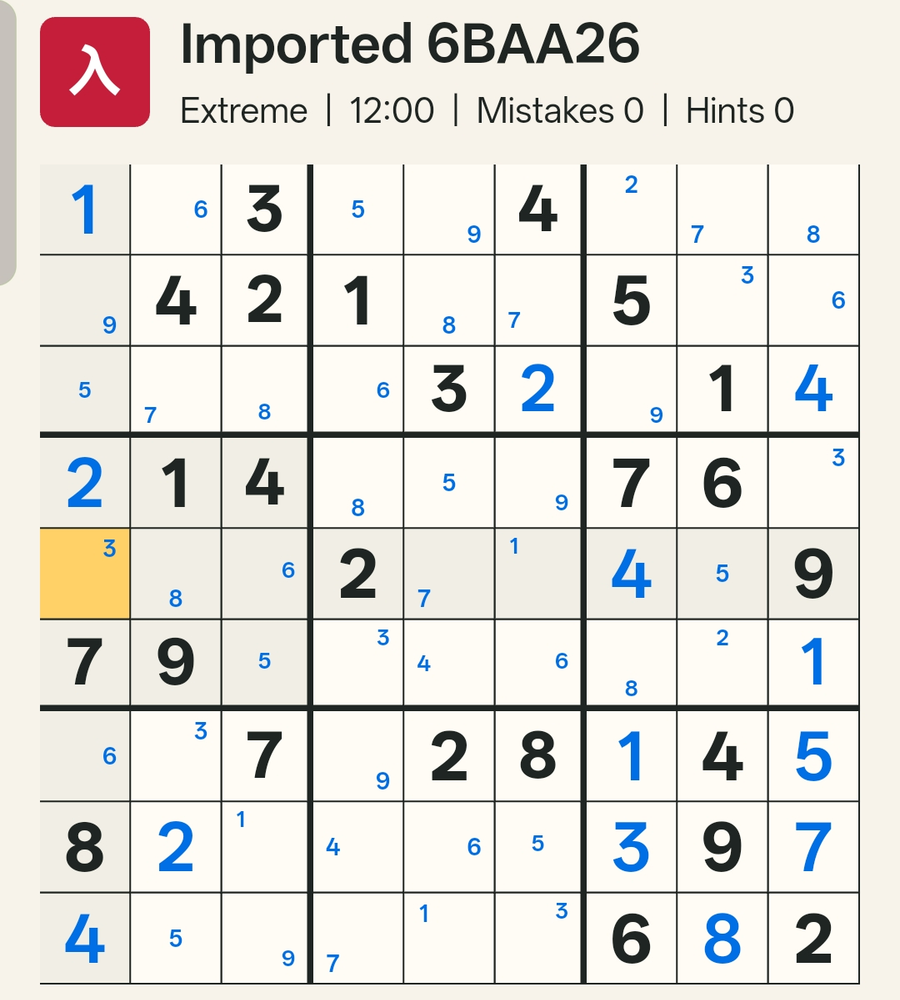
Finally, we fill in all the digits for the puzzle under the assumption we made at the fork. But we're not done yet—we need to double-check the validity of every placement.
07 · Verification
Verification
We don't need to count every box and every line from 1 to 9—that's tedious and error-prone. Here's a quick and valid method: start with the digit you assumed at the fork, and use the solution numbers (converted from trial pencil marks) to fill in and trace around the board, either clockwise or counter-clockwise.
The circular verification technique: Pick one digit (e.g. the digit 2 from the fork), and trace it box by box around the grid in a circle—say, Box 3, then Box 6, then Box 9, then Box 8, then Box 7, then Box 4, then Box 1, then Box 2, and finally verify Box 5 both horizontally and vertically. If there's no conflict or error for that digit, repeat the same circular path for each remaining digit. Once every digit has been verified in this way, you can be confident the grid is correct—because if every box has every digit exactly once, and that digit also checks out horizontally and vertically, it must be the valid answer.
This is the ibtree method's success path. Instead of reaching a contradiction and backtracking, the branch you chose simply holds—and the puzzle finishes. The circular verification step is what gives you confidence that the grid you've filled in is genuinely the one and only solution.
Try it yourself
Next time you finish an ibtree branch without hitting a contradiction, use the circular verification technique to confirm your solution.
Start a Tea MomentReconstructed from a real personal Su-Pu replay and checked against the recorded grid. Spotted a step that doesn't hold up? Tell us—every Journal article carries an accountable byline and an open correction channel.