Three-Way Fork in Box 9: A Double Contradiction
When three candidates compete for the same digit, a two-layer ibtree resolves the uncertainty—eliminating two false paths to prove the third.
In this study
01 · Backstory
A summer camp puzzle that stumped the experts
A single mother sent her son to a summer camp where there was a sudoku class. One day the boy was struggling with a very hard puzzle. The mother posted the problem online, and lots of people replied that the solution was very hard to explain.
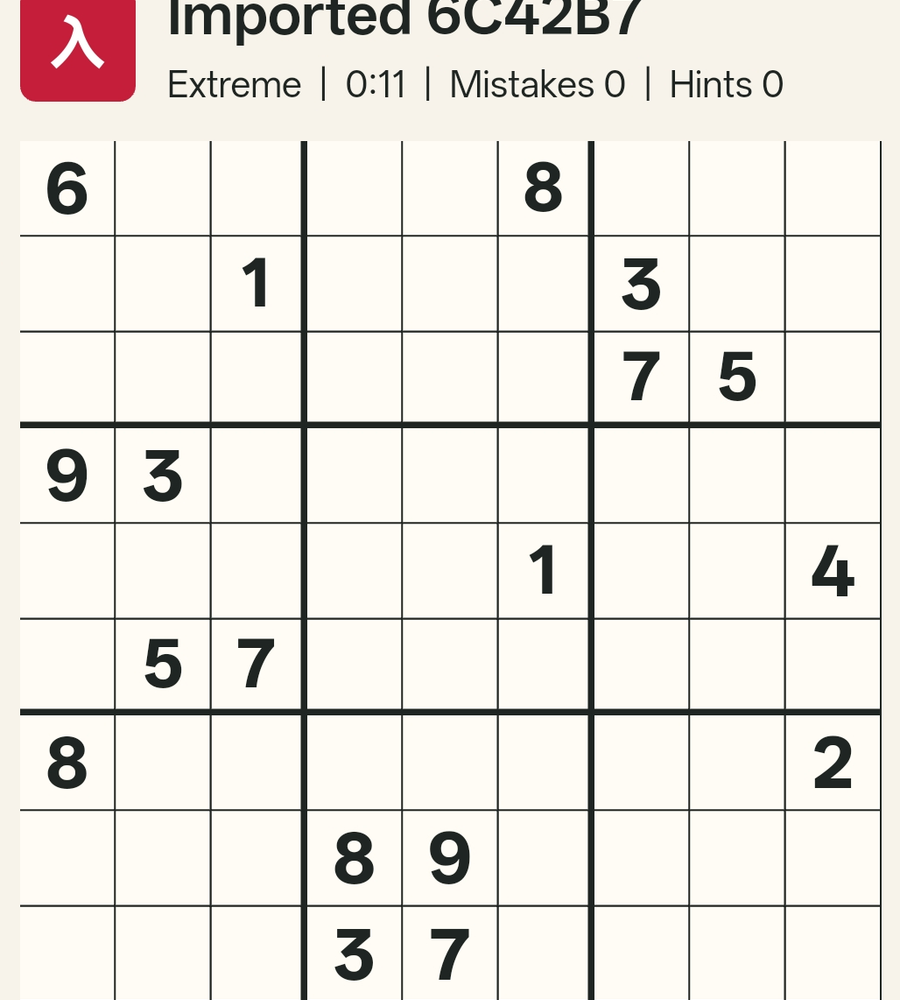
Indeed, this is an extreme sudoku puzzle rated as "Hell" (level 9), with a hodoku value of 2240 and an SE rating of 7.0. It may not be as hard as the one presented in lesson 5, but following the canred method and applying several advanced techniques to solve it would cause experienced sudoku players to scratch their heads, let alone a young learner.
But take a close look at the features and positions of digit 7. We could have better ideas with the ibtree method.
02 · Setup
Low-hanging fruit in Box 4
Before we identify the right chain trigger, let's use basic cross-hatching to get some low-hanging fruit. As expected, we can get three digits and a naked pair to complete Box 4, which are of great help down the line.
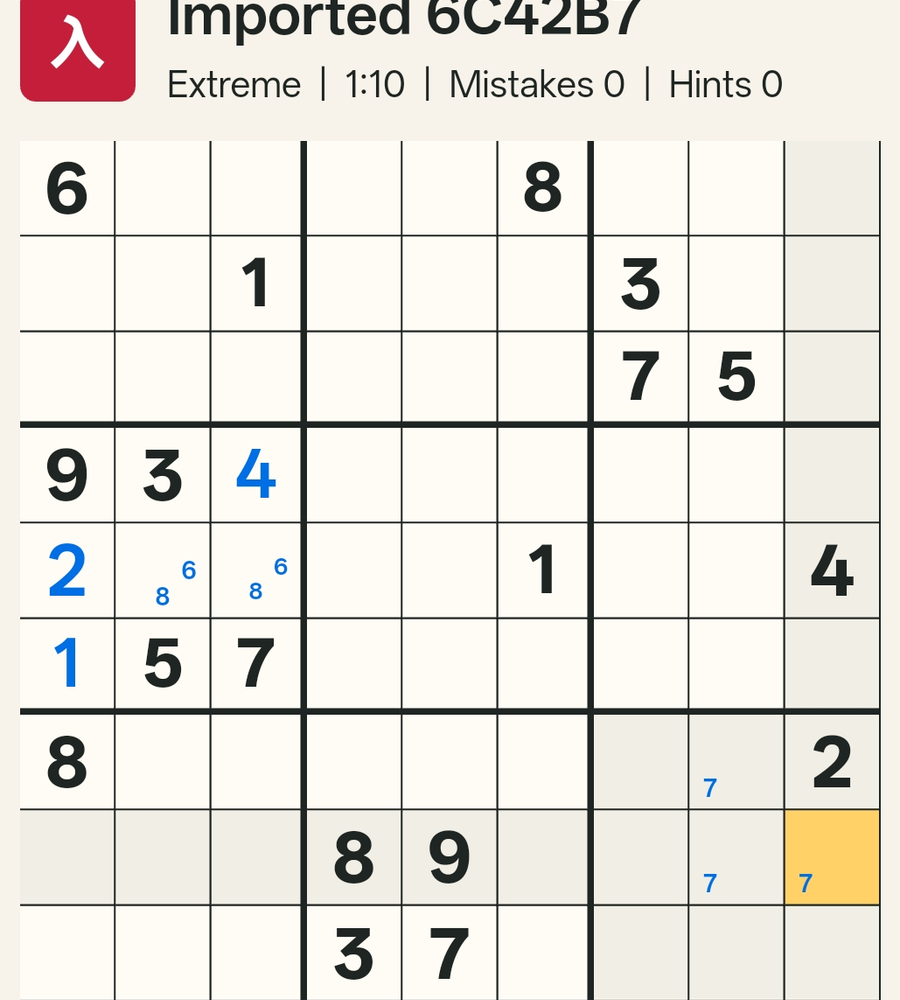
We notice that there are three possible homes for digit 7 in Box 9, all of them capable of causing a long chain of reactions. As we explained in lesson 3, a three-way fork can be conceptually re-structured as two layers of a binary decision tree.
03 · First test
Testing the R8C8 candidate
Let's first test the assumption that 7 belongs in R8C8.
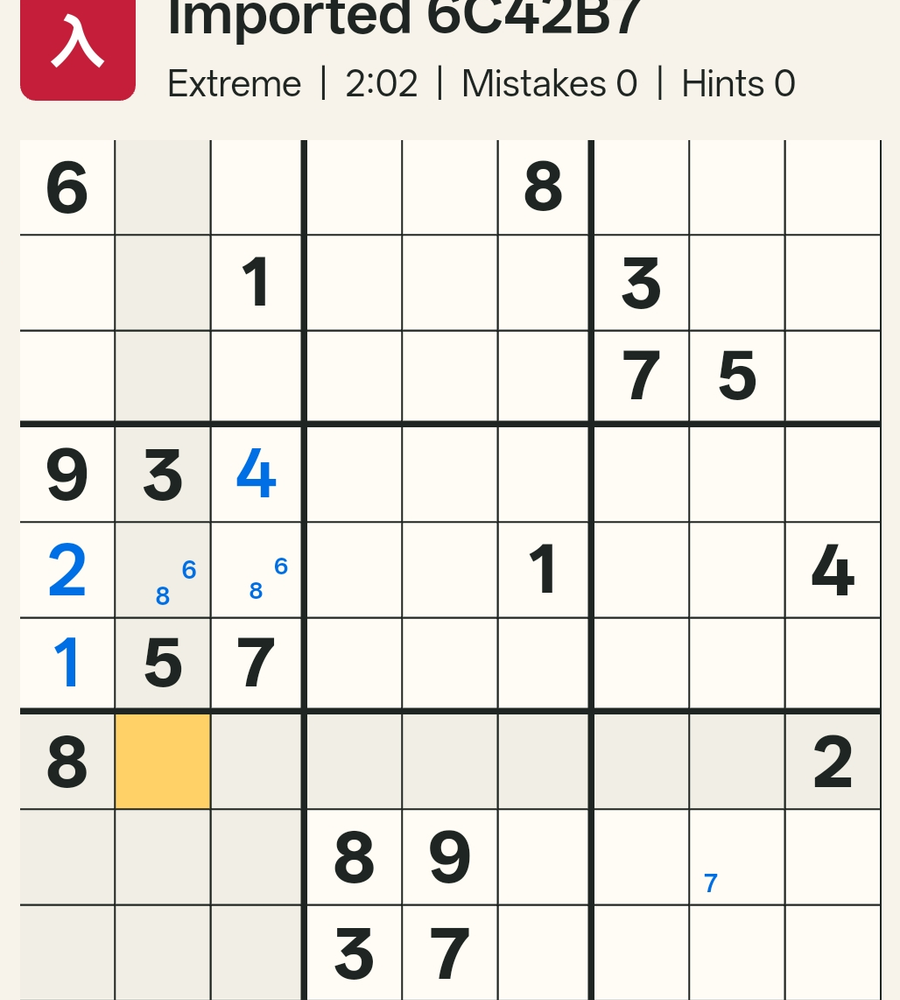
After a quick tracing around the board, we find that there is no room for 7 in Box 6.
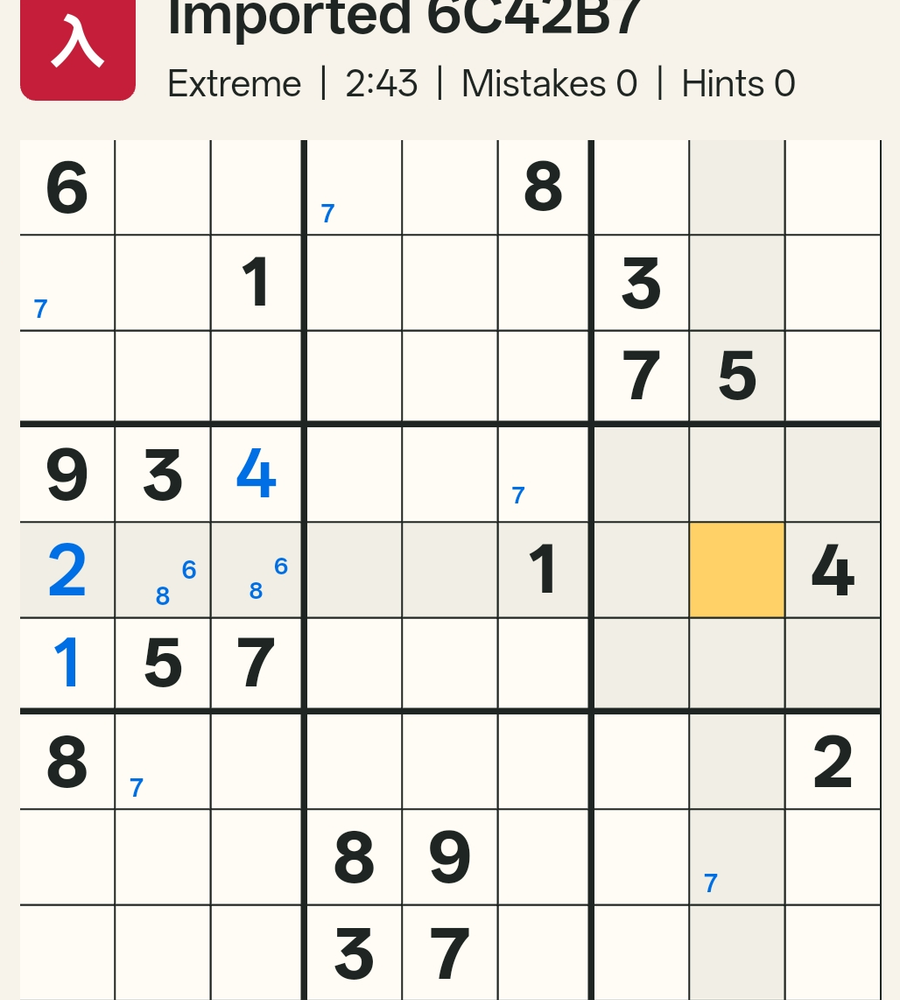
This is our first proof by contradiction. The assumption that 7 belongs in R8C8 is false.
04 · Second test
Testing the R8C9 candidate
Similarly, we can test the assumption that 7 belongs in R8C9.
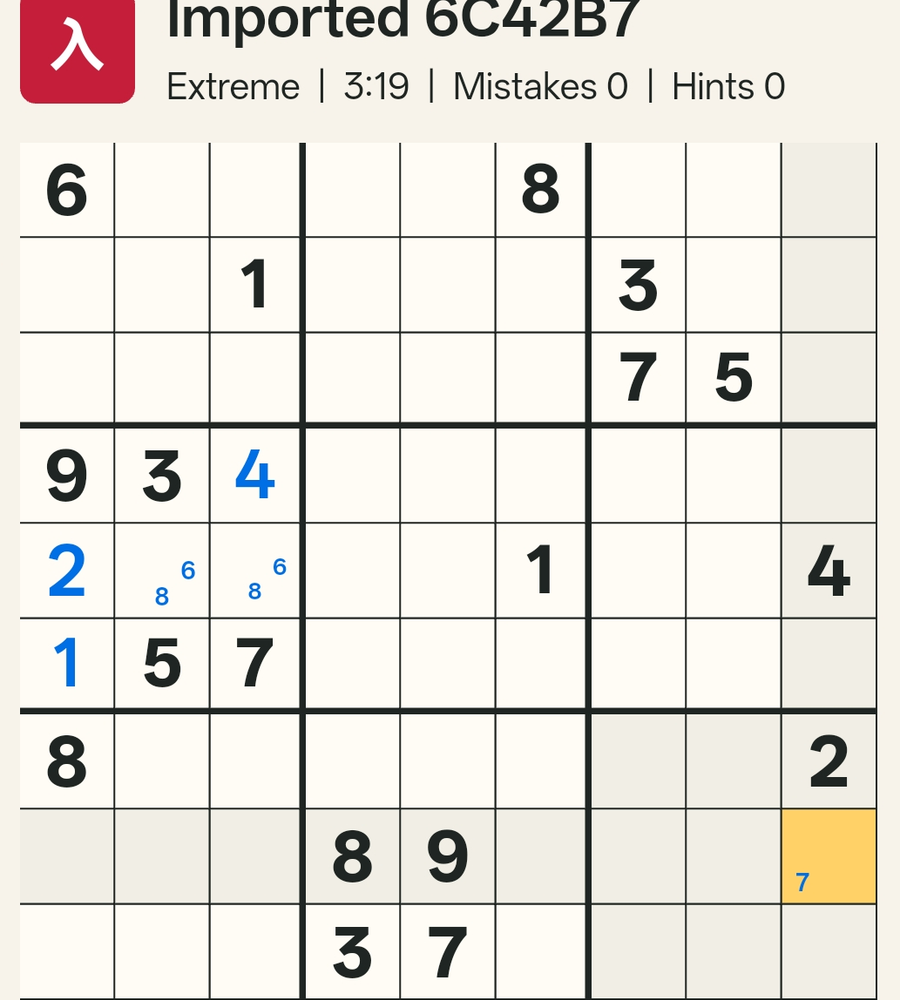
This time it takes a few extra steps with digit 3, but again there is another contradiction: there is no room for 5 in Box 1.
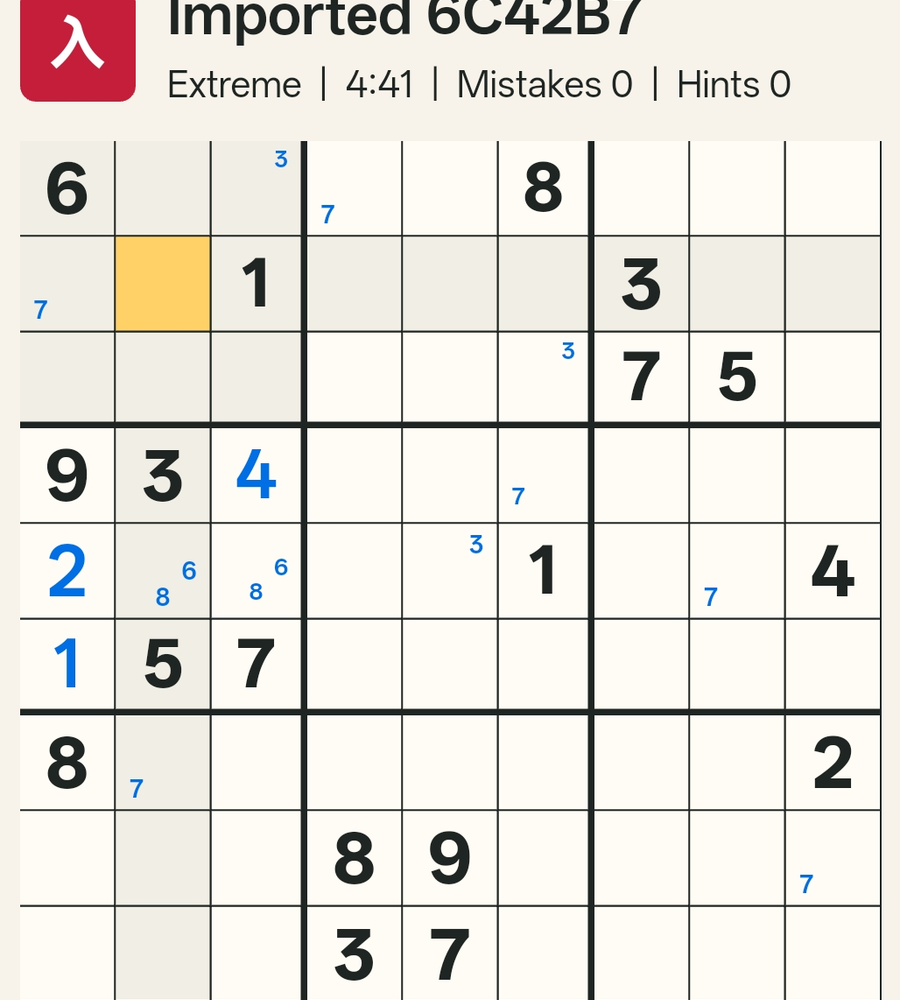
This is our second proof by contradiction. The assumption that 7 belongs in R8C9 is also false.
05 · Resolution
The only remaining candidate
Combining these two separate tests, we know for certain that in Box 9, 7 must be in R7C8.
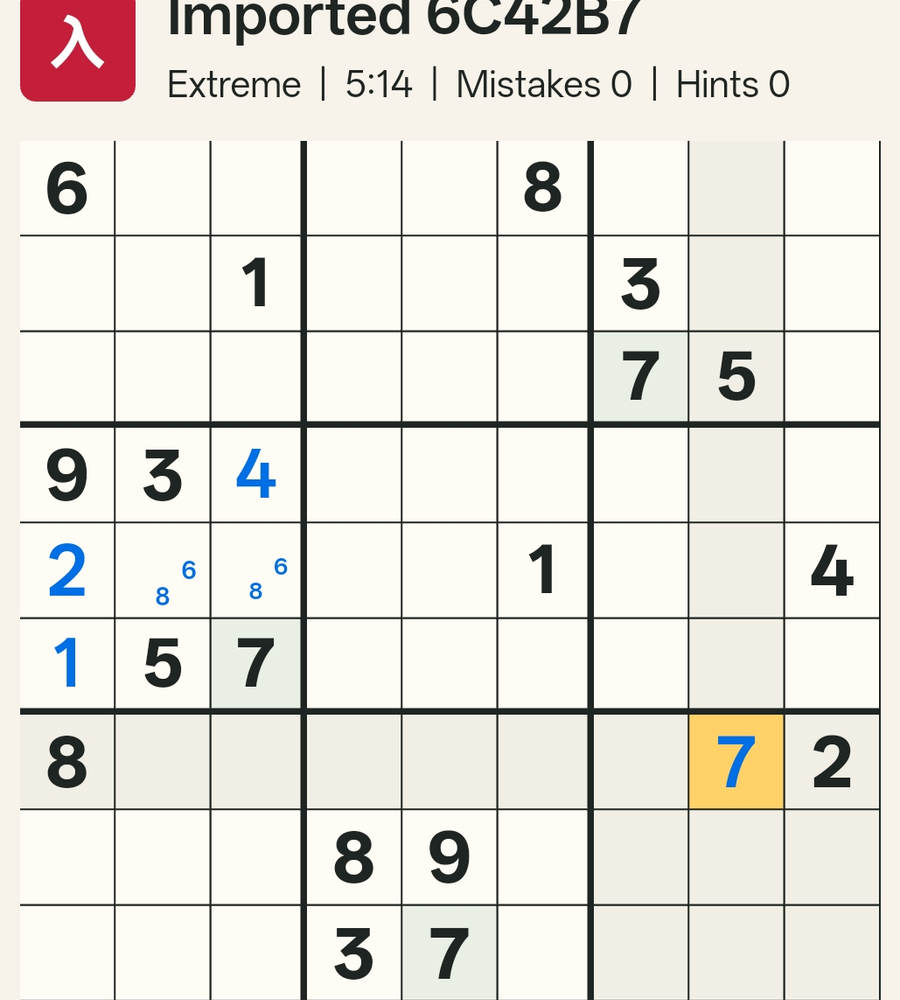
The Orbace rule for three-way forks: When three candidates compete for the same digit in a box, test two of them with separate ibtree chains. If both lead to contradictions, the third candidate is certain—no further proof required.
06 · Finish
Straightforward to the end
Once we have this critical determination, the rest of the solving is straightforward.
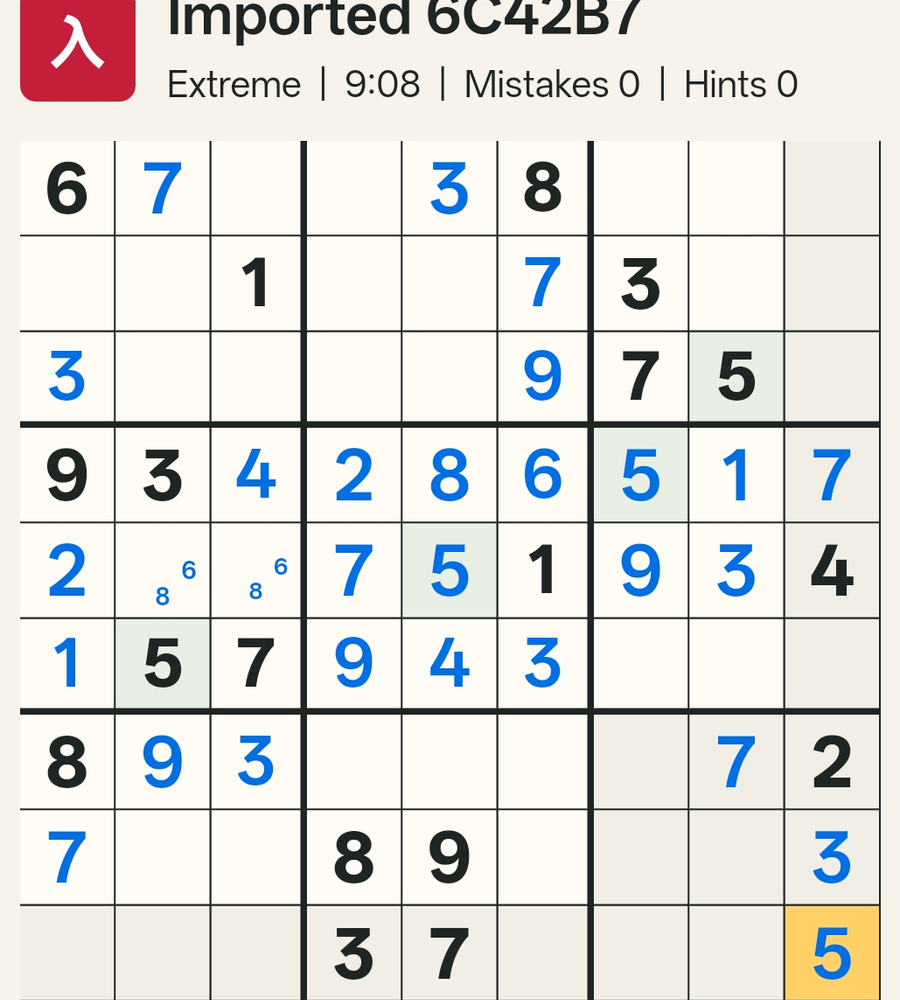
Had the poor boy learned the ibtree method, he would have saved a lot of struggling time and enjoyed his sudoku play.
07 · Tree view
The two-layer binary tree
The diagram below shows the complete inferential structure of this solve: a root fork splitting into two branches, each traced to its own contradiction, leaving the third candidate as the only valid path.
Try it in your next puzzle
The next time you encounter a three-way fork, test two candidates with separate chains. If both fail, you've proved the third—no guesswork, no advanced canred techniques, just clear logic.
Start a Tea MomentReconstructed from a real personal Su-Pu replay and checked against the recorded grid. Spotted a step that doesn't hold up? Tell us—every Journal article carries an accountable byline and an open correction channel.