The Knight's Move: A Second Proof by Contradiction
When two candidates in a box form a knight's-move pattern, one often acts as a chain trigger—tracing it forward quickly reveals which assumption leads to contradiction.
In this study
01 · Context
Not a Rare Case
Some of our sudoku players gave us feedback that the example presented in Lesson 01 might be a rare case. In this lesson, we want to share another puzzle that exhibits similar magic.
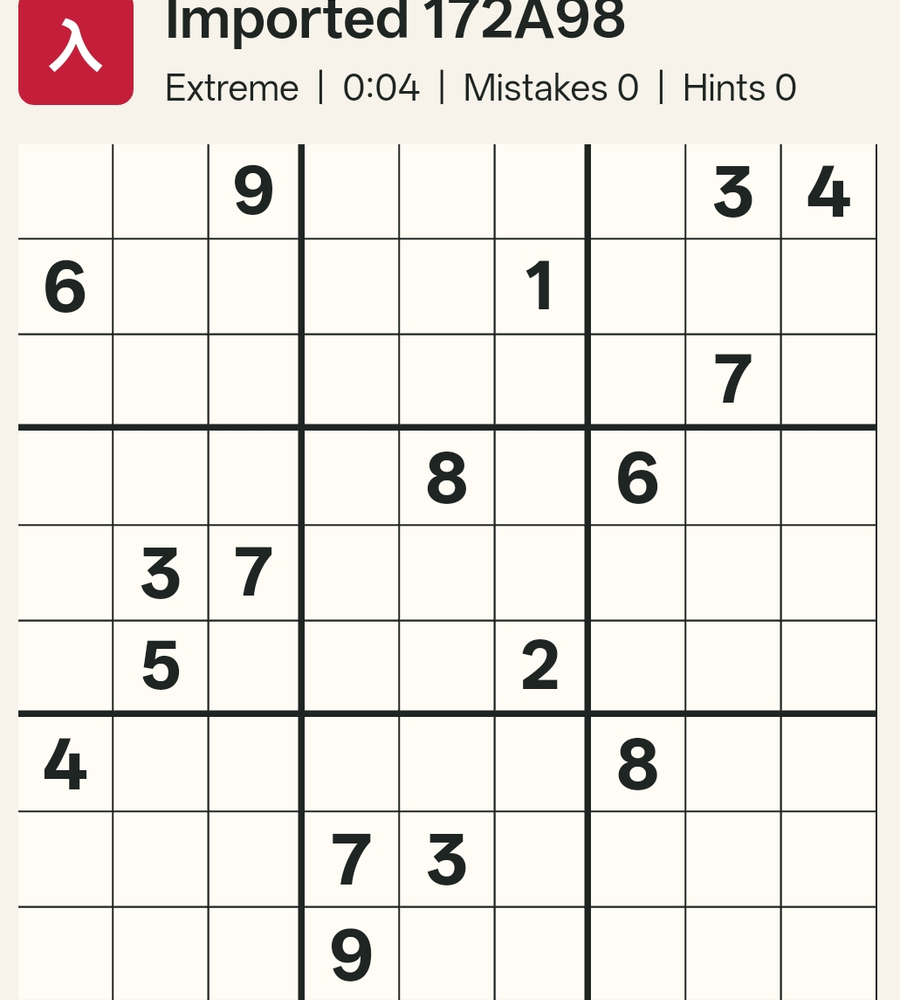
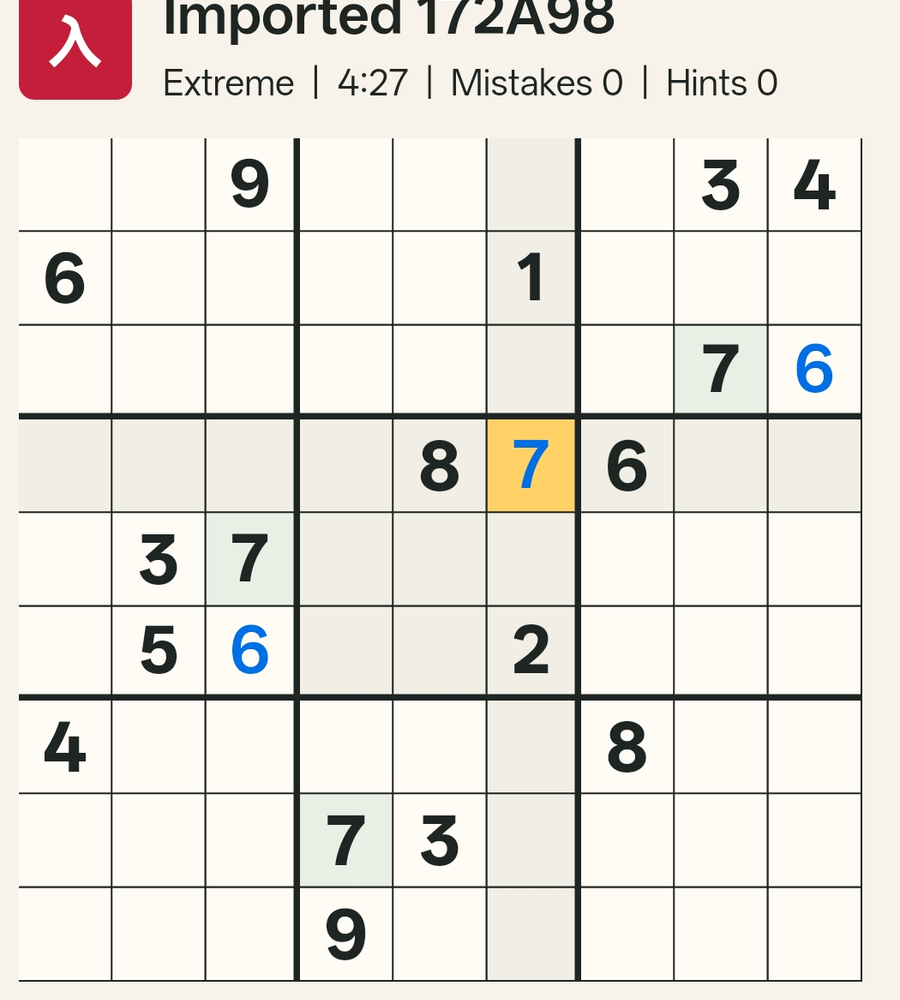
After initial examination, it seems we can quickly confirm two 6's in Box 3 and Box 4, which are helpful but not too much. Let's sharpen our focus and apply the ibtree method to find some of the structural opportunity in the grid.
02 · Fork
A Knight's-Move Pattern
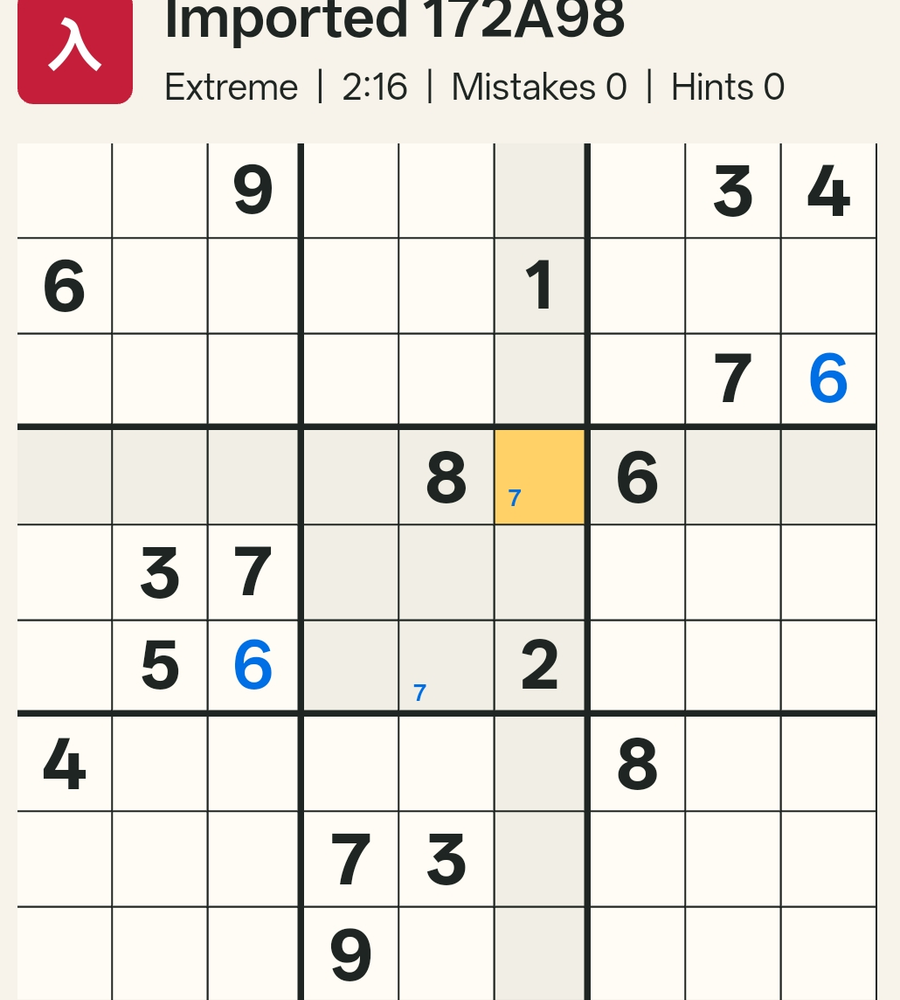
Indeed, we can see a similar pattern: a two-way fork of 7 in Box 5, the central box. The two possible candidate positions look like a knight's move—borrowed from chess terminology—which is one of the high-valued selections in the context of the ibtree method.
03 · Trigger
The Chain Trigger Technique
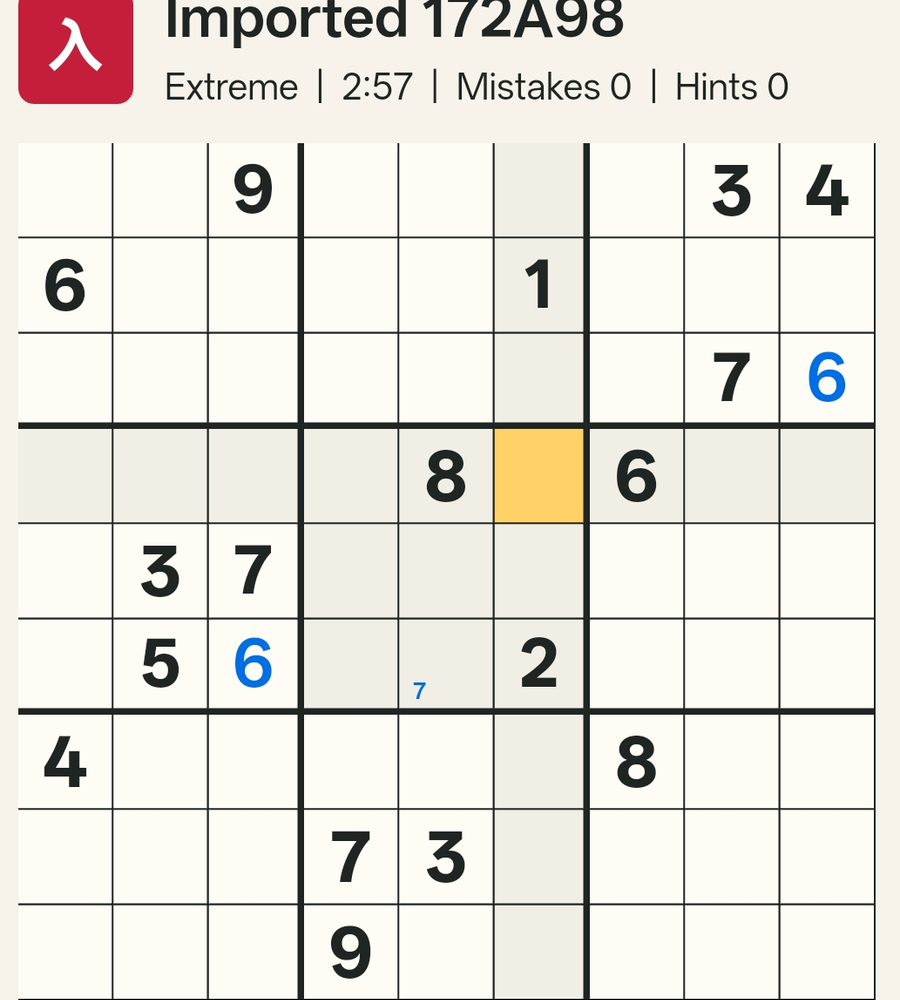
One of the key techniques in ibtree methodology is the chain trigger: we might personally believe that one candidate is correct, but placing it would not yield any additional clues. In contrast, the other candidate acts as a chain trigger—it sets off a chain of reactions based on the particular formation of given clues. The value of the chain trigger is that it adequately utilizes the information already present in the grid, thus unraveling potential conflicts elsewhere.
04 · Aha
The Moment of Contradiction
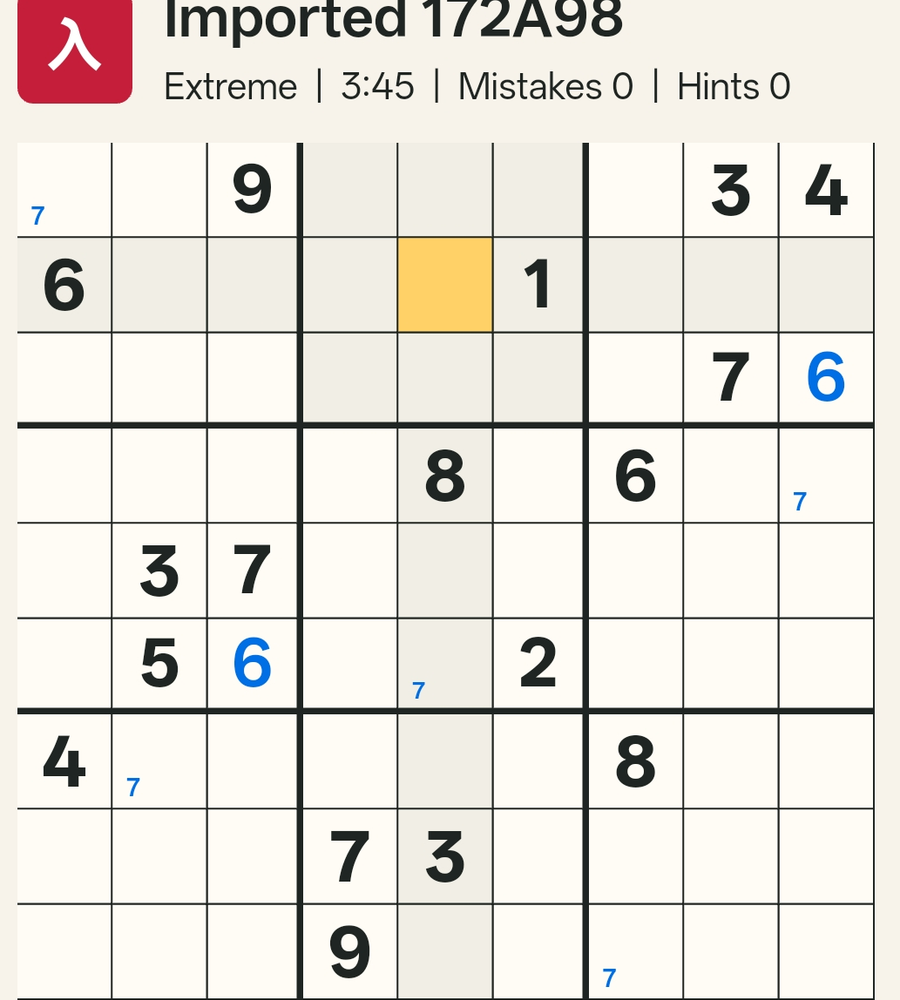
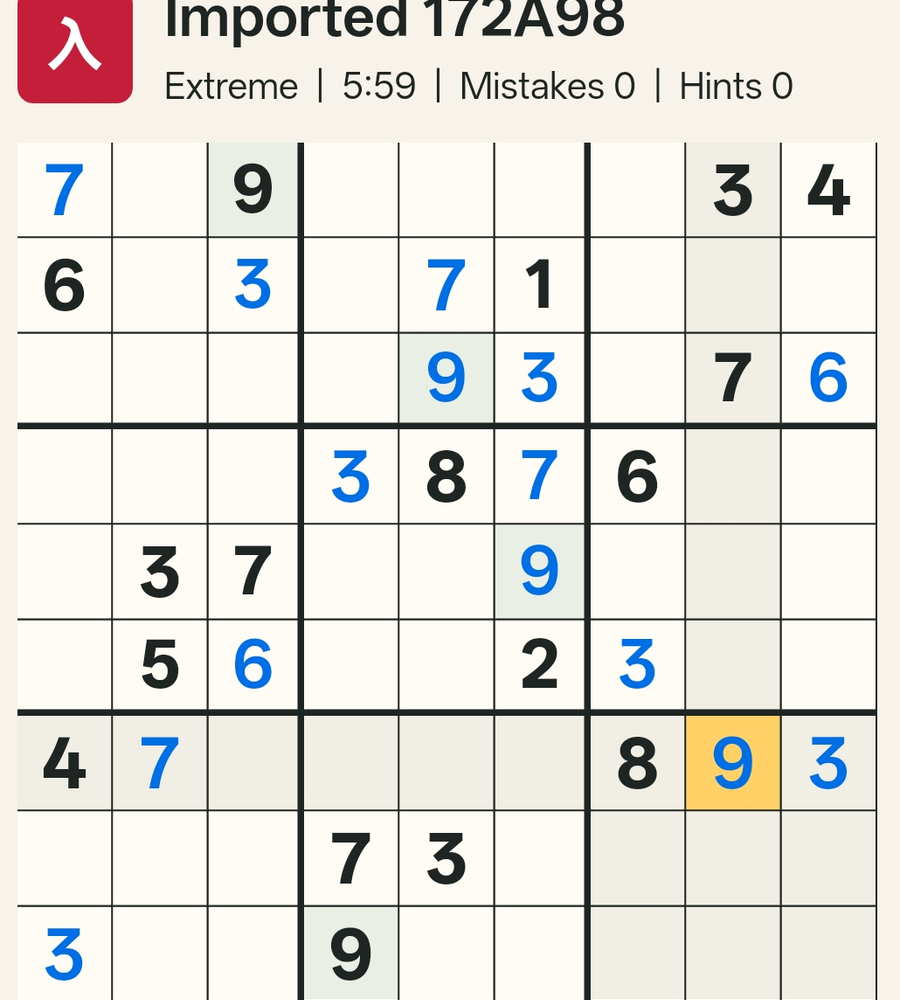
This is another aha moment. If you change your mental focus, you might be able to perform this visual check without actually writing down the subsequent candidate numbers. Indeed, 7 cannot be in that cell because it yields a conflict down the road.
05 · Unlocked
The Puzzle Unlocked
After confirming that 7 must be in the other cell, the puzzle itself is downgraded to a moderate level. Any experienced player can solve the rest of the puzzle by applying the basic rules of sudoku with minimum effort.
06 · Canred
Comparison with Candidate Reduction
This is truly the power of proof by contradiction. Had the player used the "standard" candidate reduction (canred) method to rigorously eliminate possibilities, the player would need a finned swordfish pattern and a sashimi swordfish pattern to eliminate certain critical candidates in order to make progress. While the names "finned swordfish" and "sashimi swordfish" may sound exotic and fancy, they are merely pre-packaged proofs by contradiction, acting as interim theorems to be utilized in the process of candidate reduction.
| Ibtree | Candidate reduction |
|---|---|
| Identify a two-way fork with a clear geometric pattern (e.g. knight's move). | Systematically mark all candidates in every cell, then apply elimination patterns. |
| Choose the candidate that acts as a chain trigger—one that forces a sequence of placements. | Search for advanced patterns like finned swordfish or sashimi swordfish to eliminate candidates. |
| Trace the forced chain until a contradiction appears, proving the assumption false. | Apply the pattern as a theorem, eliminating candidates indirectly via the same logical contradiction. |
| Place the correct candidate immediately, unlocking a cascade of subsequent moves. | Continue the elimination process until enough candidates are removed to make a direct placement. |
The power of the ibtree method lies in the fact that it constructs a dynamic, real-time decision tree in which a sub-branch is aggressively pruned the moment it is mathematically proven false. We must acknowledge that ibtree requires sudoku players to change mindset and mental focus a little bit—to pay attention to number formation in order to creatively pick the right chain trigger.
07 · Diagram
The Binary Tree
Below is a schematic representation of the decision tree explored in this puzzle. The root node represents the fork—the choice between two candidate positions for 7 in Box 5. The left branch traces the false assumption through its forced chain to the contradiction. The right branch confirms the correct placement.
Try It Yourself
Next time you encounter an Extreme-tier puzzle, look for a two-way fork with a geometric pattern. Pick the candidate that acts as a chain trigger, trace it forward, and watch for the contradiction.
Start Your Tea MomentReconstructed from a real personal Su-Pu replay and checked against the recorded grid. Spotted a step that doesn't hold up? Tell us—every Journal article carries an accountable byline and an open correction channel.