Solution Space, Not Candidate Space
Why ibtree's pencil digits trace a trial solution forward, not every possible candidate in every cell.
In this study
01 · Prepare
Prepare the Ground
Before selecting a chain trigger digit, we want to confirm as many digits as possible using basic cross-hatching and confined group methods. This narrows down the choice of the fork itself — the fewer open cells, the clearer the binary options become.
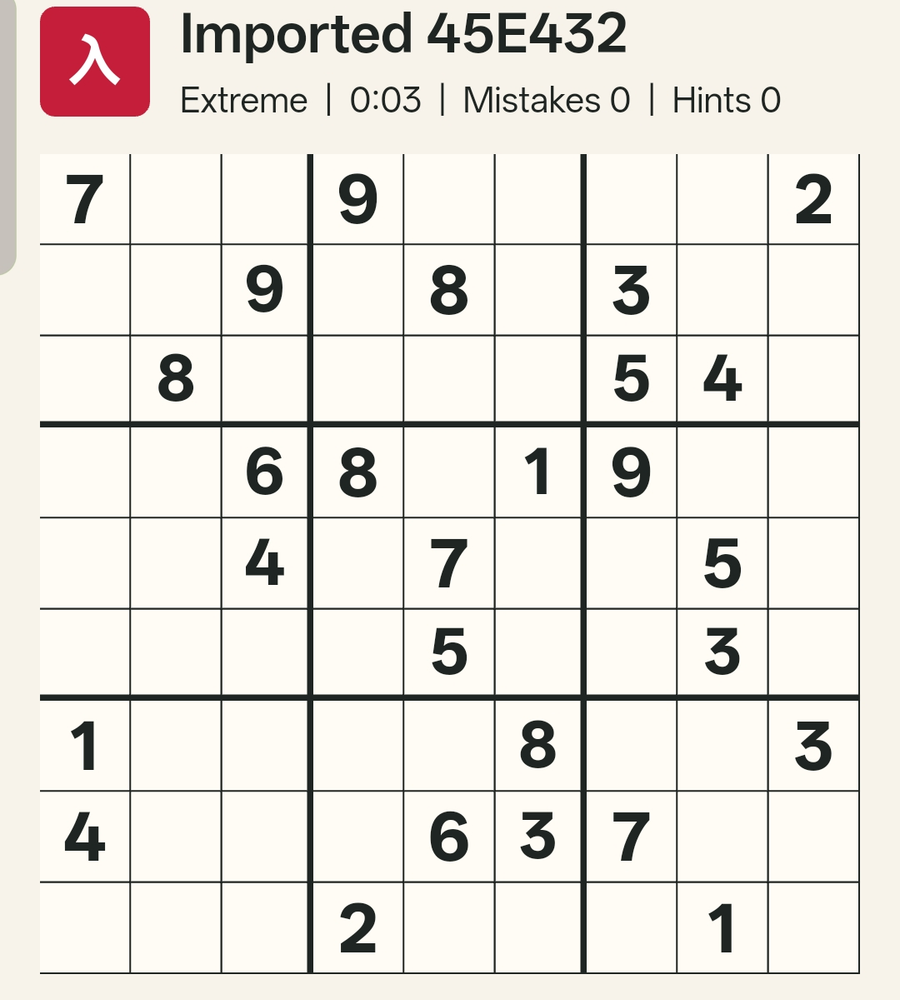
After placing 9 at R3C9 and 1 at R8C4, we can visually identify two confined groups: a 5-7 pair and a 4-9 pair, both in Box 8.
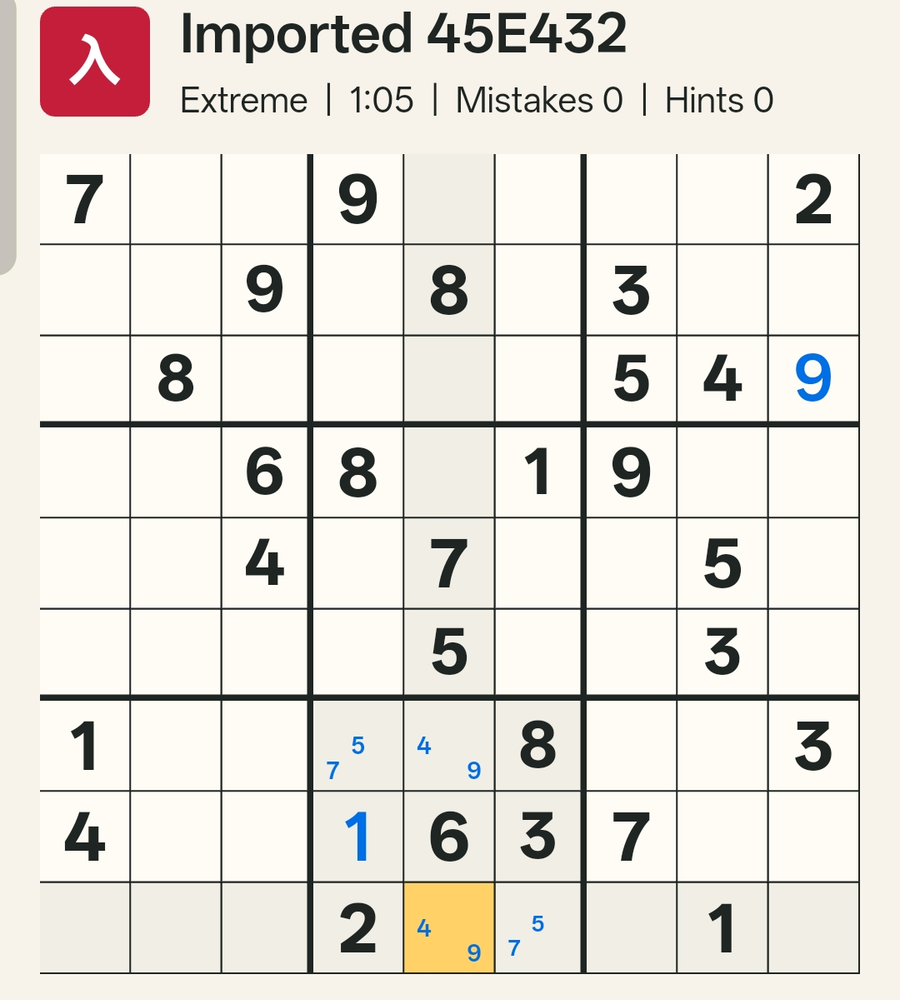
Afterwards, we can confirm 4 at R4C9 — a straightforward cross-hatch placement.
02 · Fork
Identify the Fork
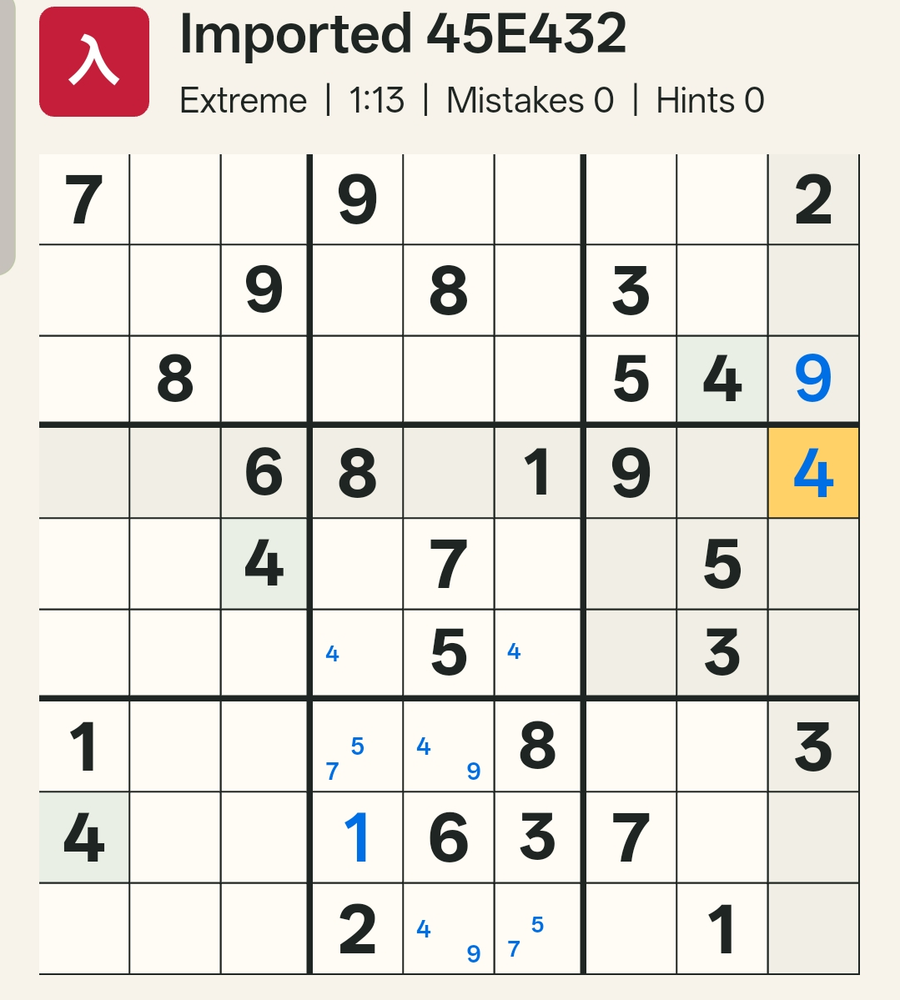
The 4 at R4C9 is helpful because it presents a binary choice: digit 7 in Box 6 now has exactly two possible homes.
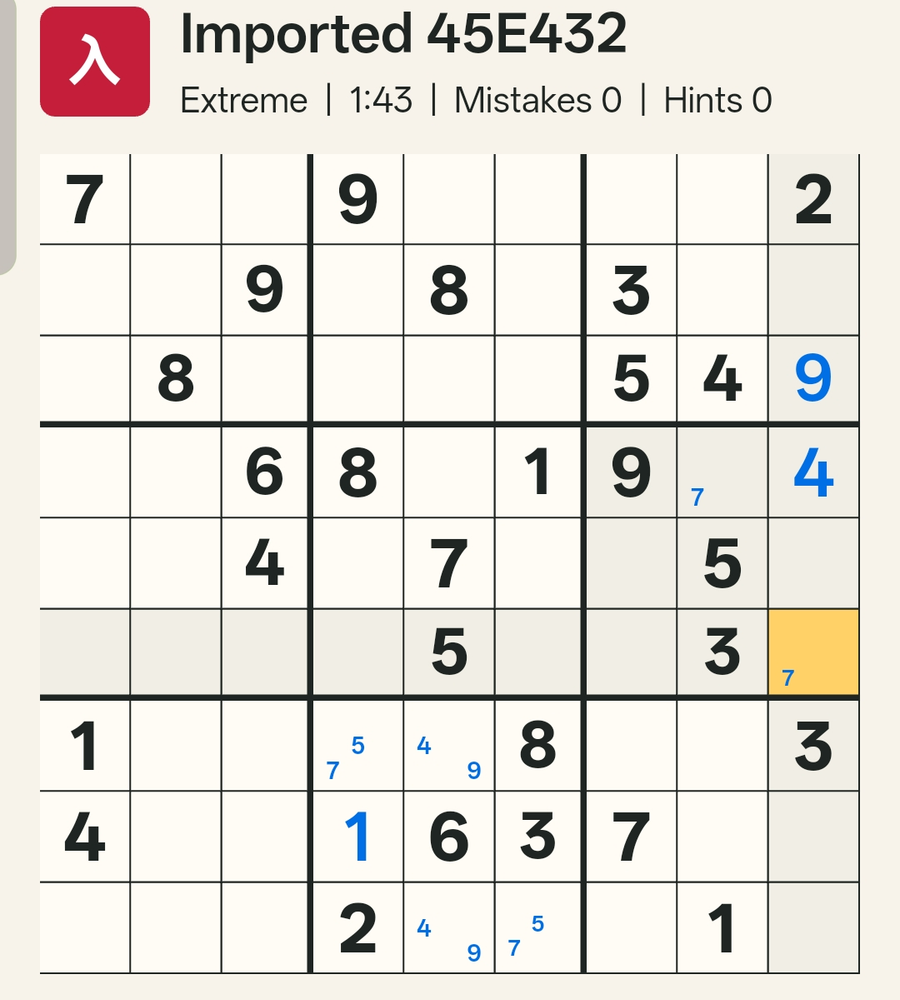
Are there any other binary choices? In Box 5, there are two possible homes for 3. But a quick visual inspection shows that neither 3 in Box 5 would substantially trigger any further forced placements. This selection is less ideal.
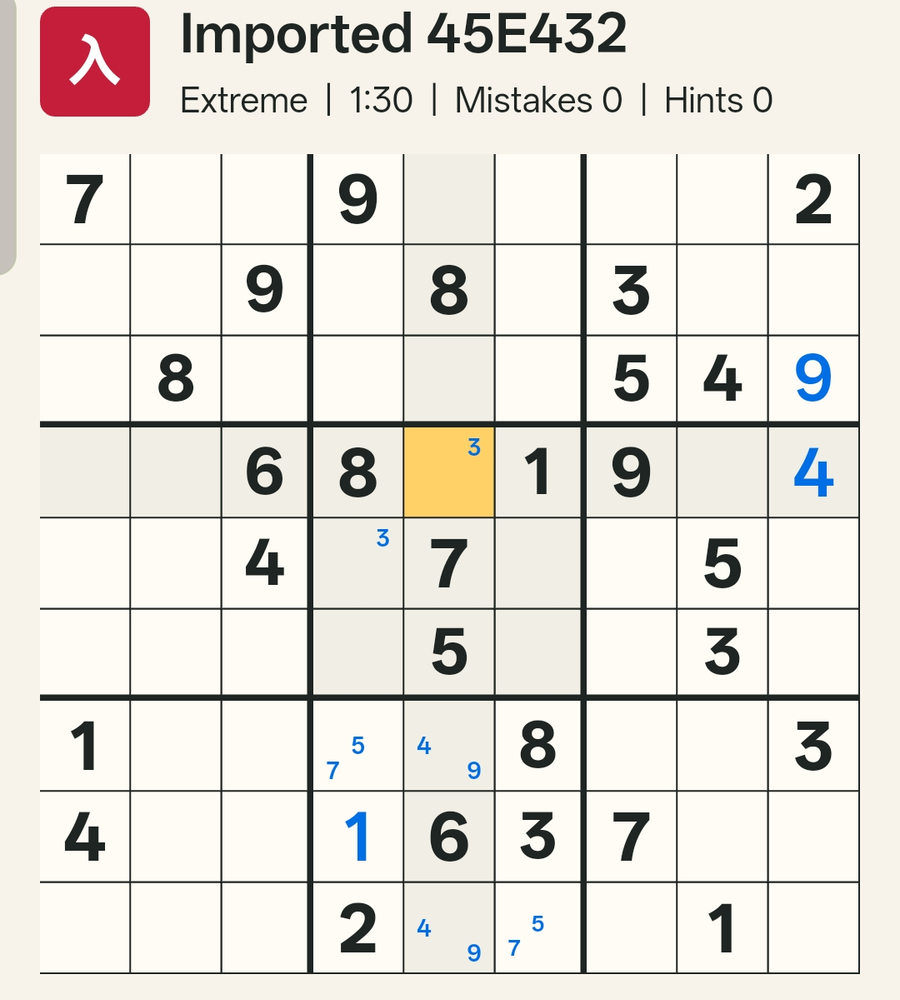
In contrast, assuming 7 at R6C9 would generate a long reaction. It's a no-brainer to test it through.
03 · Trace
Trace the Assumption
Assuming 7 at R6C9, we can immediately fill Row 4 with pencil digits.
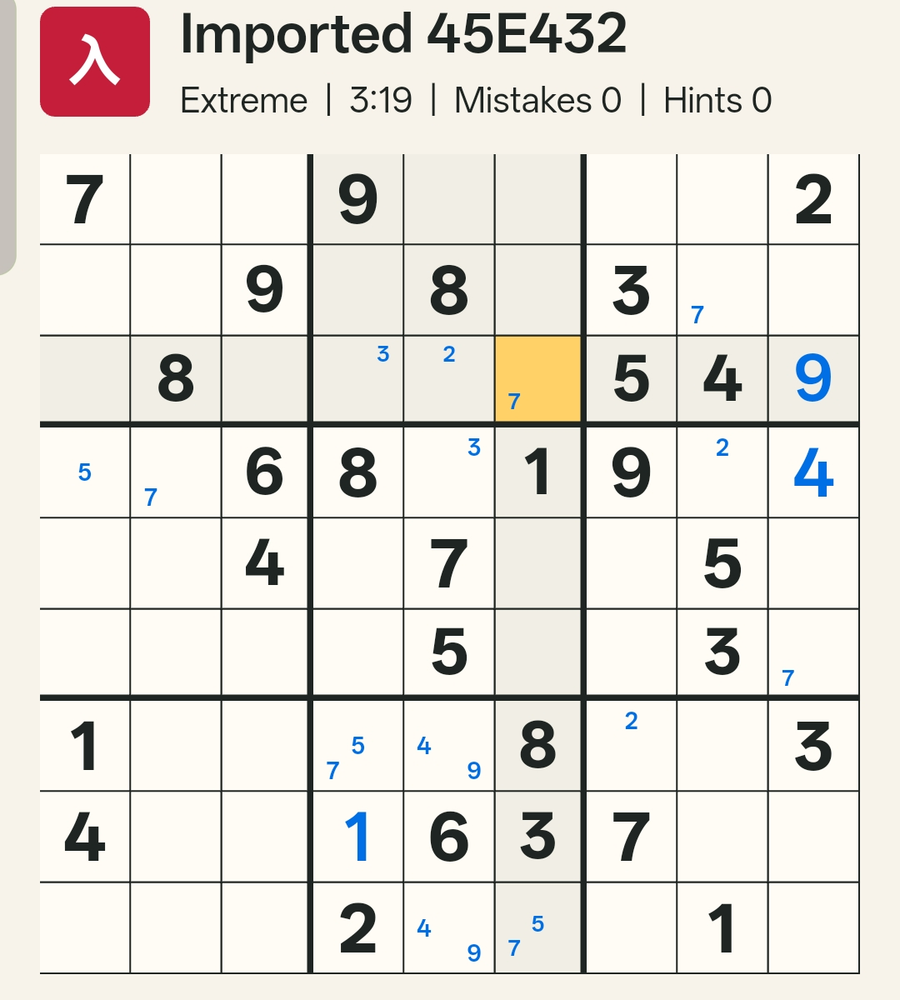
Furthermore, we can fill up Box 3 with pencil digits — including a confined group of 6-8 — and many other digits in Box 2 and Box 9.
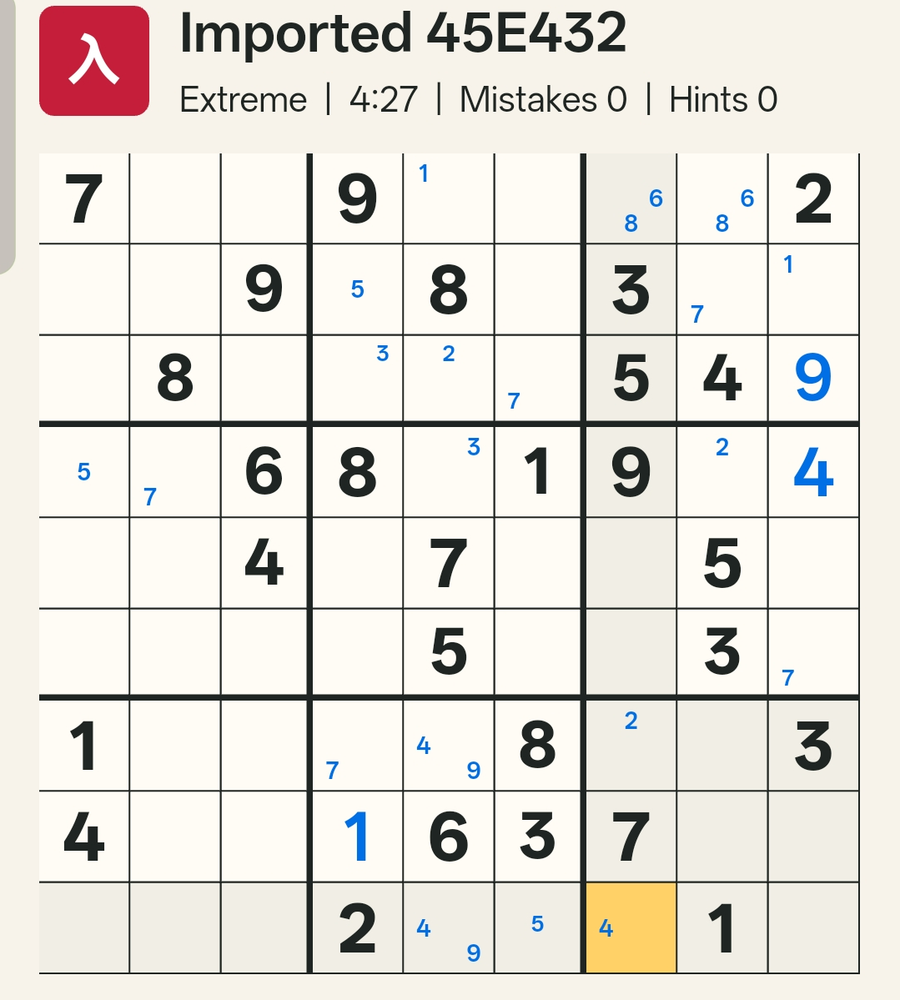
The method used here is cross-hatching — simple, easy, and straightforward. In no time, we can get the entire grid filled with pencil digits.
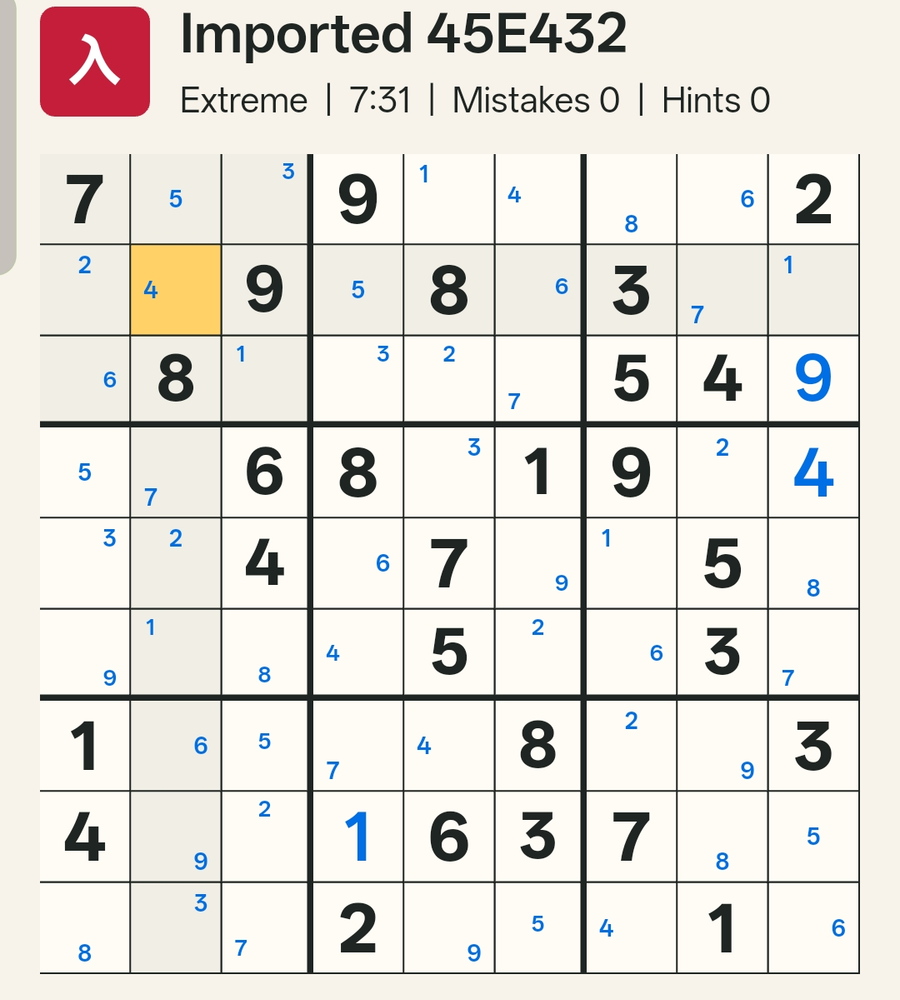
While converting pencil digits to confirmed digits, we just need to cross-check each digit — horizontally (Box 1-2-3, 4-5-6, 7-8-9) and vertically (Box 1-4-7, 2-5-8, 3-6-9) — to avoid human error.
04 · Spaces
Two Kinds of Space
One important point to make here: in the candidate reduction (canred) method, a player needs to fill in all possible digits and then perform rigorous reduction by identifying what is not possible in certain cells. In a sense, canred uses pencil digits in the candidate space — every cell holds a list of every digit that could still fit.
In the ibtree (inferential binary tree) method, pencil digits serve a different role. They represent a trial solution under an assumption, tracing forward along one branch of the fork. In this sense, ibtree uses pencil digits in the solution space — a much smaller set, since each cell holds at most one digit under the current assumption, not a full list of remaining candidates.
The Orbace rule for pencil digits in ibtree: pencil marks trace a trial solution forward, not every possible candidate. A smaller space means a faster cascade and a clearer path to the proof.
| Ibtree | Candidate reduction |
|---|---|
| Pencil digits represent one assumed solution at a time. | Pencil digits list every remaining candidate in every cell. |
| Solution space: one digit per cell, chosen under the current assumption. | Candidate space: multiple digits per cell, reduced step by step. |
| Fast forward cascade: a single assumption fills the grid quickly. | Systematic elimination: each technique removes one candidate at a time. |
| Proof by contradiction if the assumption fails; immediate confirmation if it holds. | Gradual narrowing until only one candidate remains in each cell. |
05 · Retrospect
Retrospect
Was it lucky to try out 7 at R6C9? Yes — the assumption held, and the grid filled cleanly. Was it guesswork? No. If the assumption had caused a conflict, we would have confirmed 7 at R4C8 by proof of contradiction. Either way, the fork resolves.
This is the discipline of ibtree: pick a binary choice, trace it forward in solution space, and let the grid tell you whether the assumption holds or breaks. The pencil digits you write are not a catalog of possibilities — they're a single trial solution, committed enough to cascade forward, light enough to erase if it fails.
Try this in your next solve
Next time you face a fork, trace the assumption forward in solution space — one trial digit per cell, fast and light. Let the cascade do the work.
Start a new puzzleReconstructed from a real personal Su-Pu replay and checked against the recorded grid. Spotted a step that doesn't hold up? Tell us — every Journal article carries an accountable byline and an open correction channel.